Sustainability is the idea that goods and services should be produced in ways that do not use resources that cannot be replaced and that do not damage the environment. It also embraces social and other non-environmental factors. As the UN Sustainable Development Goals show, actions and conduct are inter-related; an impact in one area has a consequence in others.
Sustainability needs to be understood as value-enhancing in its own right. Sustainability policies should be built-in, not bolted on. Industry education, promotion of understanding of the value of sustainability, how to implement etc and take advantage of promotions are all important.
Sustainability presents an opportunity to transform companies, industries, economies, drive innovation, and add value by improving business performance, as well as contributing to climate goals, improved environment, better business and improved societal outcomes. Integrating sustainability is as crucial as digitalization, both being essential enablers for future business transformation. EU-TH FTA should enhance Thailand’s adoption of sustainability principles and practices, but the FTA is not the only driver of such adoption.
Sustainability is a broad and debased term. There are any number of conferences, programmes, development initiatives and other activities statements of intention in the name of sustainability. Lack of clarity can lead to nebulous thought and to greenwashing.
It is important that EABC defines what it intends for this WG which ,would support and meet expectations about what might be expected of the European Chamber of Commerce Thailand. Thus sustainability issues in relation to European – Thailand trade and investment would be high on the expectation list.
Objectives of the Sustainable Business Working Group
The core objectives of the WG are to support the needs and sustainability-driven transformation aspirations of European business in Thailand, to promote sound economic, environmental, and social practices, encourage transparency and accountability, and contribute to positive development initiatives and engage in constructive advocacy towards these objectives. Standards for measurement and reporting of climate change management and other ESG aspects are essential for investor confidence. The WG advocates the adoption of sustainable practices across all business sectors and economic activities.
Scope: key competencies and policy areas that the WG include:
i) Awareness, knowledge about climate fundamentals – Paris Agreement, Kyoto Protocol, UNSDGs, United Nations Framework Convention on Climate Change (UNFCCC), European Green Deal.
ii) Legal bases and policy/legislative tools for sustainability – Paris Agreement, COP, Thailand’s proposed Climate Change Act, other non climate
iii) Labour and human Rights – familiarity with ILO conventions and what human rights mean in a Thailand labour market context. Thailand’s proposed mHREDD law (mandatory human rights and environmental due diligence) and recent amendments to the Labor Protection Act.
iv) Concept of Responsible Business Conduct (whether this is through the OECD construct, or similar concepts – eg from SDGs or other)
v) Familiarity with the language and jargon of Climate and Sustainability – eg Net Zero, Carbon Neutral, GHG / CO2 equivalent (and MtCO2e), NDCs (including Thailand’s recent NDC 3.0) , Article 6.2 ITMO, Carbon Trading, ETS, Carbon Pricing, Carbon Tax, Green Finance, ‘Mitigation’, ‘Adaptation’, CCUS, CCS, Sequestration, ‘ESG’ literally and as a proxy, SDGs, IDGs. Familiarity with the pathways to Net Zero (national Net Zero is changing from 2065 to 2025).
vi) Trade requirements: CBAM, CSDDD, CSRD, EUDR etc. – and proposed revisions.
vii) Measurement, Reporting, Sustainability and Climate Accounting and reporting; IFRS S1 (Sustainability), S2 (Climate) – evolution from voluntary to mandatory; evolving requirements for Thai companies. Knowledge about platforms to support measurement, reporting and support for transformation (eg Carbonwize, ESGPedia, CREX etc)
viii) Carbon markets (EU ETS, ASEAN) – essentials, ETS; Carbon Tax.
ix) Green / Sustainability Finance – ASEAN taxonomy II, Thailand taxonomy. Drivers – eg Climate Action 100+ members’ expectations, Role of UNEP – FI. Aligning Finance Flows with climate goals.
x) Evolution of policies, regulation and objectives to understand the bases and trajectories, for a meaningful future, not just present application.
xi) Trade and Sustainable Development (TSD) chapter in the EU-TH FTA, according to text provided by the EU covers these main topics.
- Labour
- Gender Equality
- Environmental Governance
- Climate
- Bio diversity Forests
- Marine biology / blue economy
- Responsible Business Conduct
Noting that the legislative source is EU regulation, not the FTA.
Scope: Key functions
- Devise a programme to focus on the topics and developments most relevant to and with the greatest impact on the European business community in Thailand, so that the outcomes are relevant, real and useful and not just theoretical.
- Promoting an inclusive but focused definition of Sustainable Business that encompasses a wide range of business activities, from financial and funding sustainability to operational and technological sustainability.
- Support sustainable business practices and policies by leveraging knowledge, networks, and official access to develop, build, and scale sustainable practices, including about supply chains; and (for Climate) managing Scope 3.
- Proactively participate in the development as early as possible of legal frameworks and policies concerning sustainability through constructive advocacy which draws on Working Group members and is informed by business and market needs and national strategy.
- Play a leading role in policy and information consistency in relation to the proposed RBH Thailand (Responsible Business Help Desk) in accordance with an MoU, and collaborate with other Working Groups in that engagement.
- Build consensus within the community by aligning with current national priorities and directives, in particular the Net Zero Climate commitments and in doing so, support standardization in measurement and reporting to give investor confidence in the Thailand economy and to support companies in their net zero journeys and transformations at company, industry and economy-wide levels.
- Assist with an understanding of cost normalization – costs of being green, of sustainable trade and how, over time, experience, technology, regulatory learning can contribute to greater ease of doing sustainable business.
- Keep a forward-looking focus, understanding developments and trajectories in order to be future-ready.
- Engage with a select small group of advocacy partners being NGOs, supra-national bodies, industry groups and others including OECD Accession on relevant topics. This can be done by inviting such partners to WG meeting (see Operating Guidelines – the Working Group Chair has discretion to do this) and interacting and collaborating in other ways such as joint seminars, dialogues, contribution to white papers etc.
Information about Working Group Chair
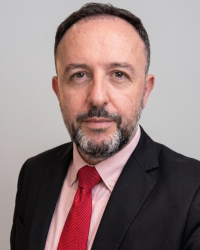
Mr. Patrice Pischedda brings over 25 years of professional leadership across Asia, with specialized operational experience in environmental monitoring, industrial reliability, and sustainability. Currently serving as Managing Director of Acoem in Thailand and Global Group Sales Director (Executive Committee member), he bridges local operational realities with international green technologies and corporate ESG strategies.
In Thailand, Patrice has led critical environmental infrastructure projects, including high-precision air quality monitoring networks for the Bangkok Metropolitan Administration (BMA) and comprehensive noise monitoring systems across three major airports for Airports of Thailand (AOT). In parallel, through Acoem’s industrial reliability business, he partners with manufacturing and processing industries to optimize asset performance—directly lowering energy intensity, minimizing operational downtime, and reducing emissions and industrial waste.
A long-standing leader within the European-Thai business community, Patrice previously served as President of the Franco-Thai Chamber of Commerce (FTCC) for three years and Counselor for eight years, giving him extensive experience in bilateral advocacy and regulatory engagement.
Attachments
-
DOWNLOAD
 Sustainability Working Group Scope and Purpose Nov 2025 v 1.7-clean
 Sustainability Working Group Scope and Purpose Nov 2025 v 1.7-clean