Automotive Working Group of the European-ASEAN Business Centre urges Thai Government to Solve Important Issues
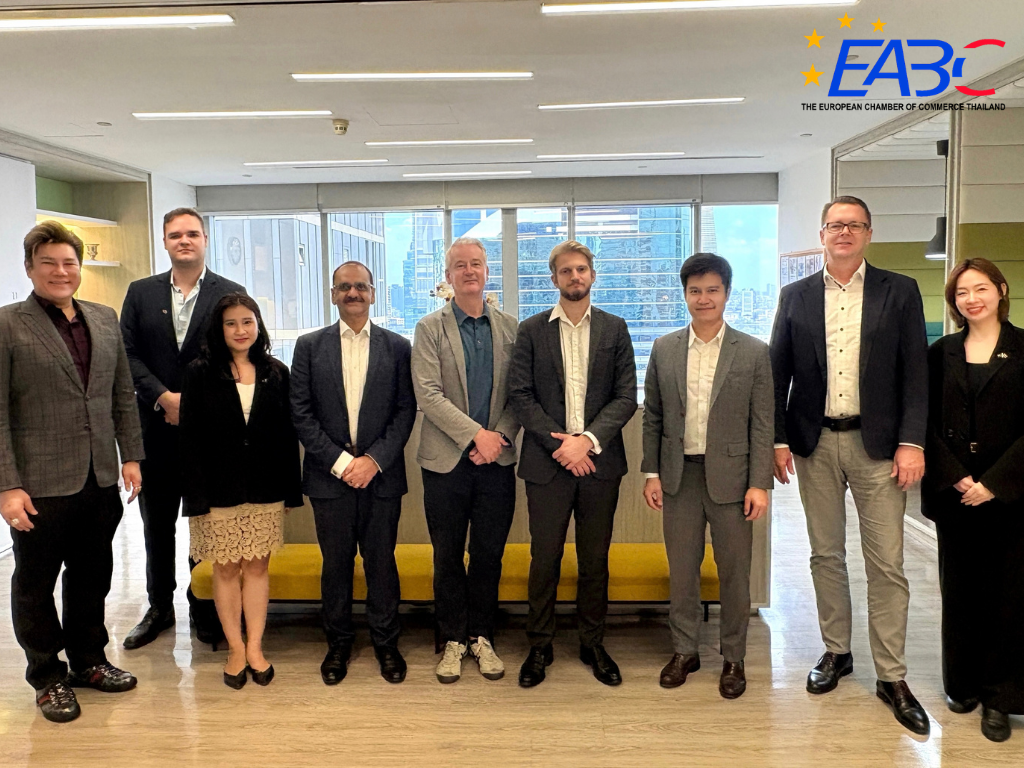
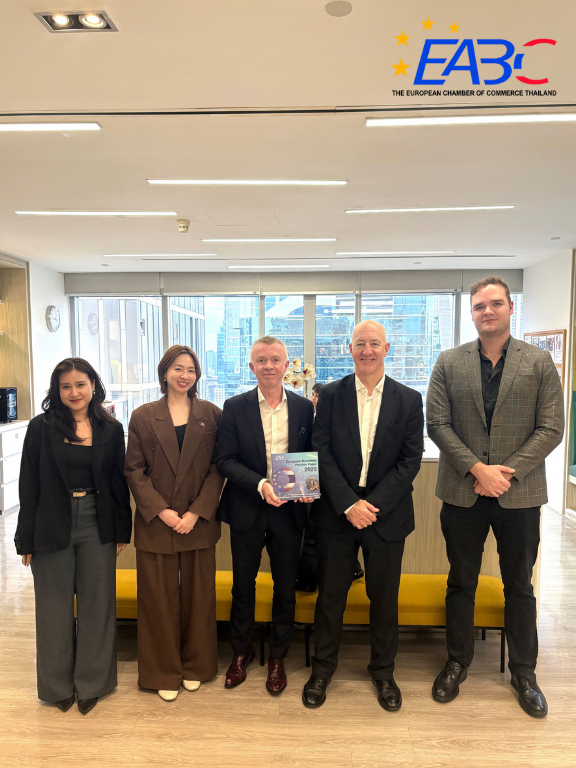
The European-ASEAN Business Centre recently arrange the meeting for the Automotive working group with Minister of Industry, H.E. M.R. Pongsvas Svasti, to provide for a policy discussion on key industrial policy development in Thailand and major issues of interest of the European business. The discussion was particularly on the following issues to strengthen Thailand’s competitiveness: Standardisation, CO2 emission based taxation and Availability of skilled and unskilled labour.
Thailand’s automotive industry has been experiencing significant shortage of both skilled and unskilled workers. Despite an offer of relatively high salary and compensation package, the industry still faces serious difficulties in recruiting qualified personnel for the available positions.
Recommendation:
Recognising that both short and long term endeavours are needed, the EABC is supportive of the public-private partnership solution to address this problem, e.g. by means of education and training programmes. The EABC looks forward to working more closely with the Thai authorities, particularly the Ministry of Labour, Ministry of Education and the Thailand Automotive Institute (TAI), on the HR development initiatives in response to the industry needs.
Onerous regulatory requirements as well as the application of domestic standards that differ from international standards can hinder trade and harm businesses. Over the years, the automotive manufacturers in Thailand have to face redundant approval/homologation standards, such as requirements for re-testing on the already approved products or separate quality audits. This renders the compliance procedures not only repetitive, but also costly and time-consuming. The industry calls upon Thailand to expediently rectify this problem in order to strengthen the country’s competitiveness as the regional hub of the automotive industry.
Recommendation:
The Thai authorities – particularly TISI – are encouraged to recognise and accept overseas test reports and plant audits. The EABC strongly supports of the Mutual Recognition Arrangement (MRA) on the automotive products between Thailand and the EU.
As a leader among ASEAN automotive producing countries, Thailand should set the example for excise tax policy that shapes consumption behaviour. Eco Car has been an outstanding success due to its environmental impact and economic impact. EABC recommends that a revised tax policy encouraging CO2 reduction can be beneficial to all stakeholders. This excise tax policy must not be delayed further, but a compromise within vehicle categories possible to encourage passenger car and pickup truck manufactures to mutually benefit.
Recommendation:
Proposal for a new excise tax policy moving away from a graduated tax rate based on increasing engine capacity, towards a tax based on a decreasing rate of vehicle carbon emissions. The policy must be ‘technically neutral’ meaning that (petrol, diesel, hybrid, compressed natural gas, ethanol, and electric vehicles) are subject to the same tax scheme.
Press contact:
Tel: 02-670-0624
E-mail: [email protected]